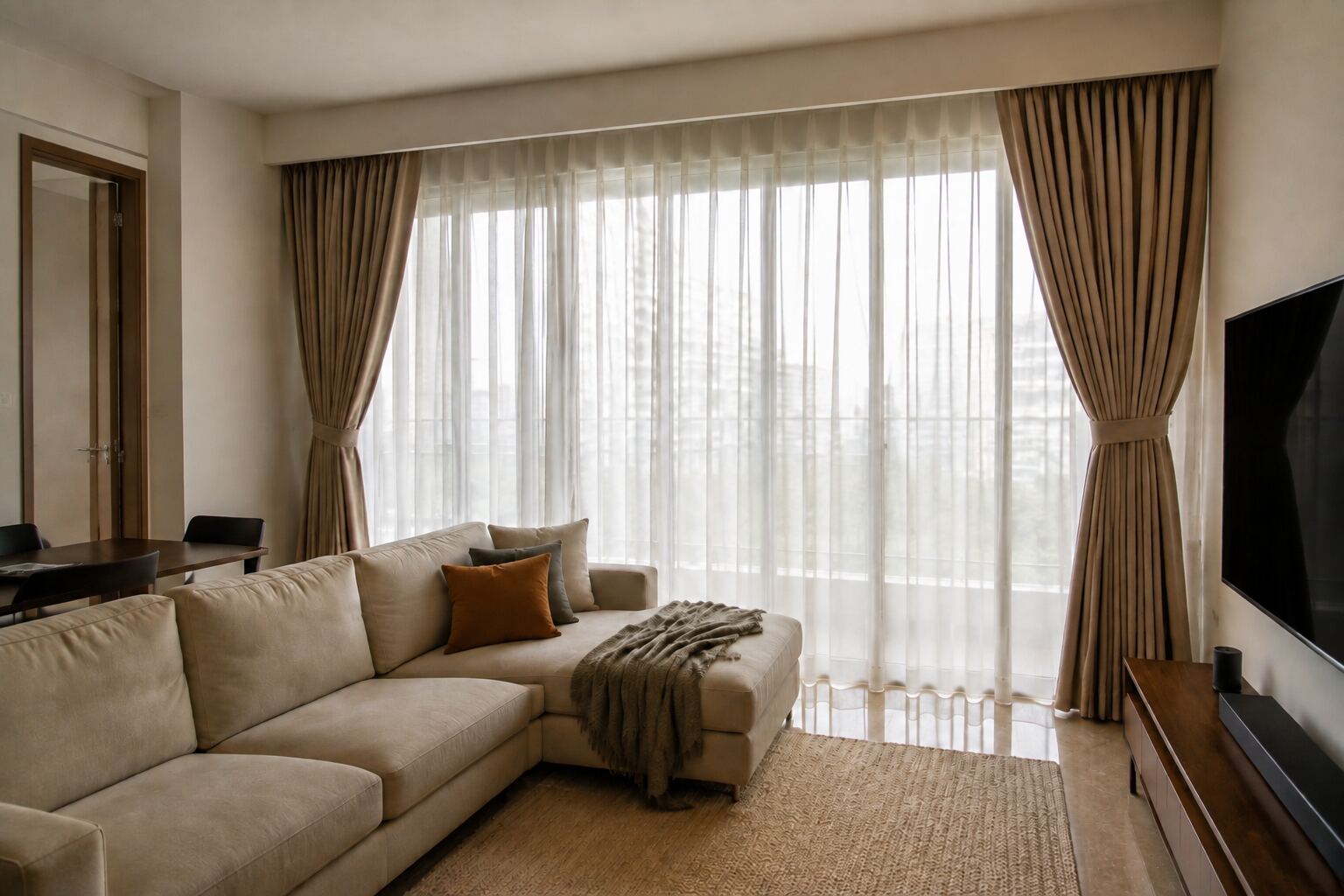
Choosing curtain fabric is not only a colour decision. The fabric affects how much light enters the room, how private it feels, how the curtain falls and how it will look after years of daily use. A fabric that looks beautiful in a small sample may feel too thin, too heavy or too reflective once it covers an entire window.
The right starting point is the room itself. Think about how you use the space, where the windows face and how much maintenance you are prepared to do. There is no single fabric that is best for every room in a Singapore home.
Start with how the room is used
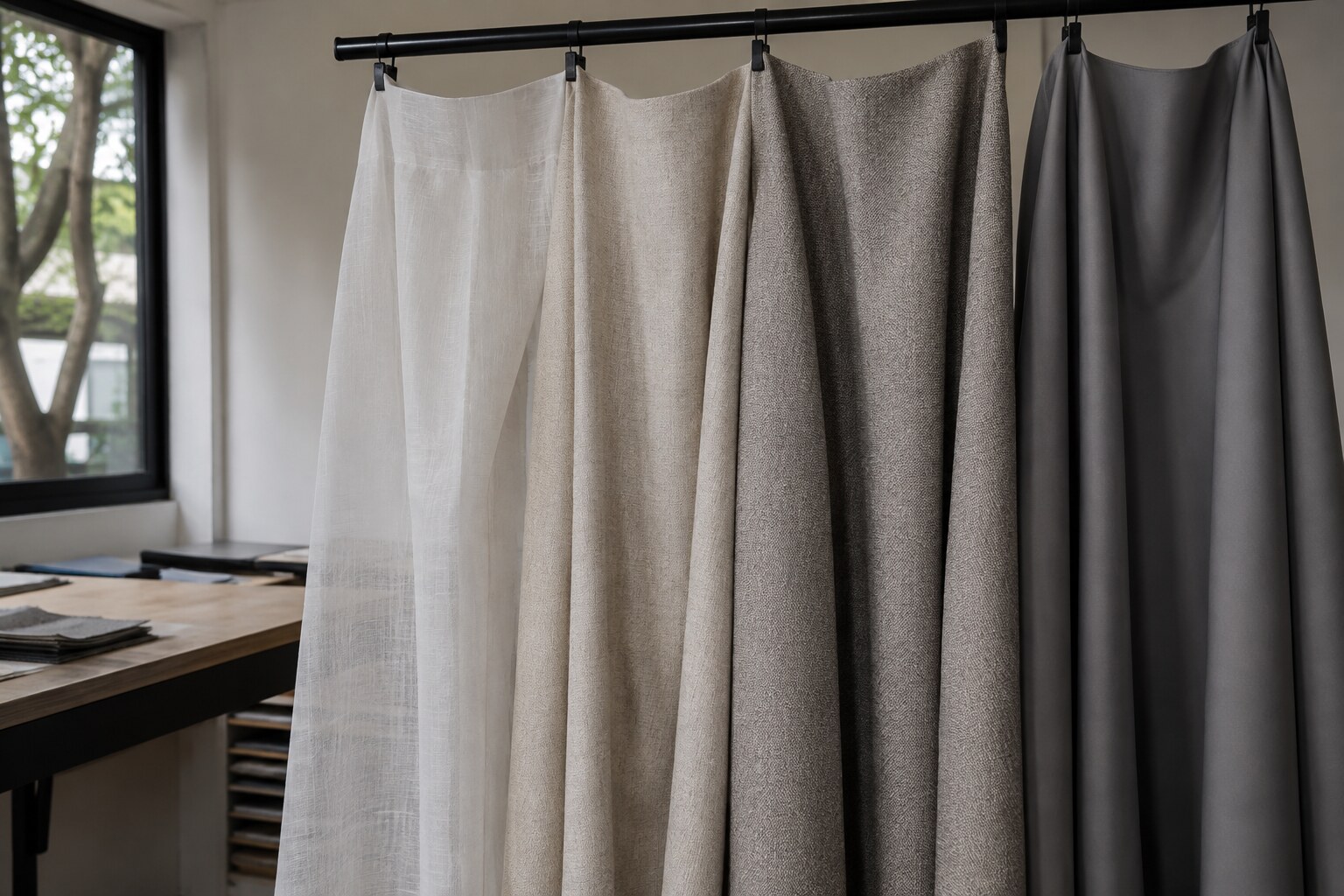
Bedrooms usually need privacy and better control of early morning light. Living rooms often need a balance between daylight, privacy and a softer appearance. A study or media room may need more glare control, while a child’s room may call for a fabric that is practical to maintain.
- Bedrooms: consider a night or blackout layer when darkness and privacy are important.
- Living and dining rooms: combine a softer day layer with a denser night layer when you want flexibility.
- Study or media rooms: choose a fabric that reduces glare without making the room permanently dark.
- Moisture-prone areas: consider whether blinds may be more practical than fabric curtains.
Decide how much light you need to control
Day curtains, sometimes called sheers, soften daylight and can provide limited daytime privacy depending on the fabric and lighting conditions. They are usually selected for their openness, texture and gentle drape rather than for darkness.
Night or dim-out curtains reduce light and provide stronger privacy, but they are not the same as blackout curtains. Blackout fabric is designed to prevent light from passing through the material. The final level of darkness will also depend on the track, curtain overlap and light entering around the edges.
Look beyond colour
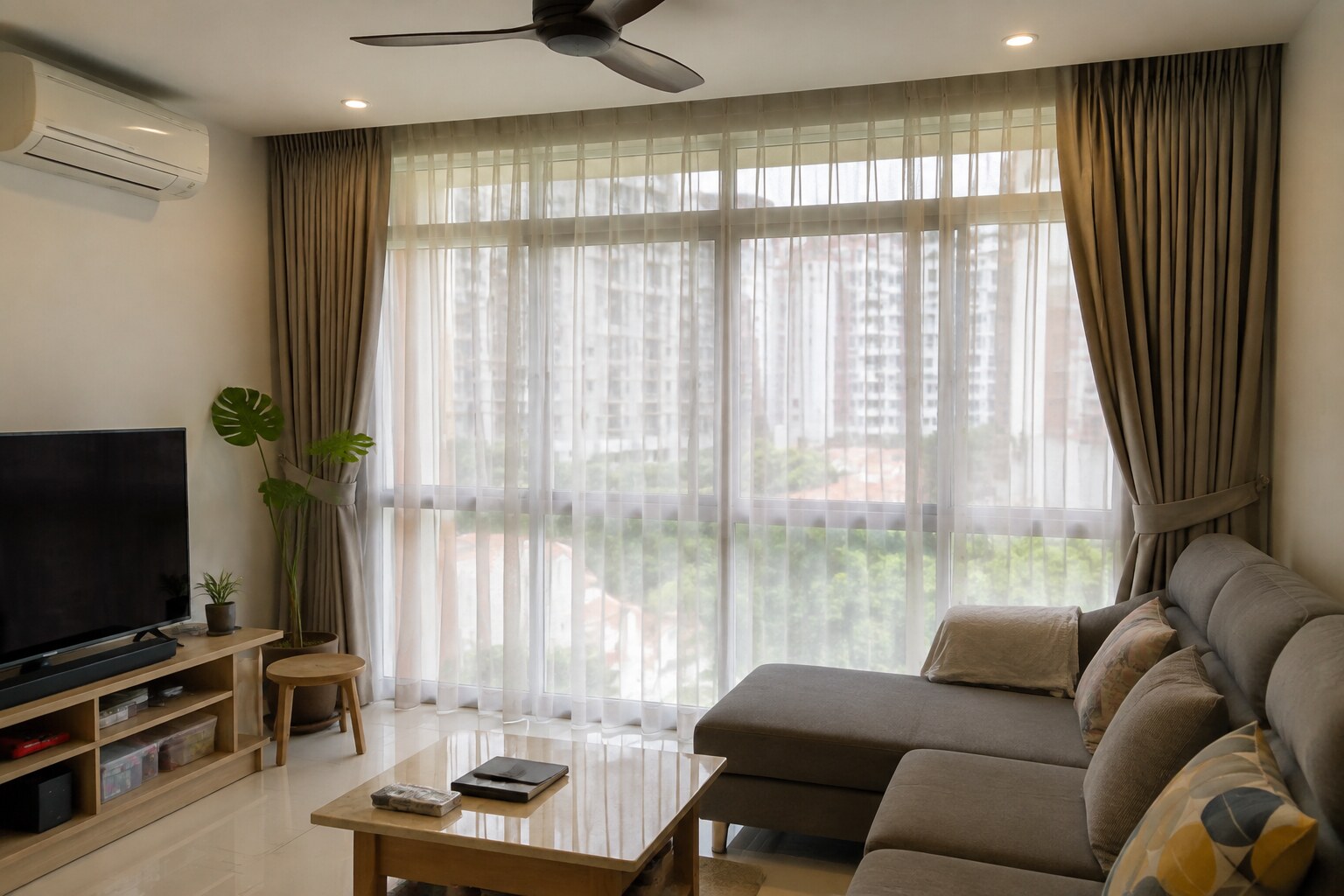
Two fabrics in a similar beige or grey can look completely different once made into full curtains. Texture, thickness, surface sheen and weight all affect the finished result. A tighter weave may feel more structured, while a softer fabric can create a more relaxed fall. Some fabrics catch the light; others absorb it and appear calmer.
This is why it is worth viewing a larger sample in both daylight and evening lighting. Place it beside your flooring and furniture, and check whether the texture still feels right from across the room.
Understand the common fabric choices
Most curtain fabrics supplied for Singapore homes are polyester-based or polyester blends. This does not mean they all look or feel the same. Polyester can be woven, embossed, brushed or blended to create very different finishes.
- Polyester: versatile and available in a wide range of textures, colours and light-control levels.
- Linen-look polyester: gives a natural woven appearance while remaining more practical than many pure linen options.
- Chenille and textured blends: add a fuller, richer surface and a heavier visual presence.
- Velvet: creates a more dramatic, substantial look and is best used where its weight and texture suit the interior.
- Jacquard or embossed fabrics: add pattern and depth through the weave or surface rather than a flat printed design.
- Sheer fabrics: range from open and airy to more textured options with different levels of daytime privacy.
Think about drape and fullness
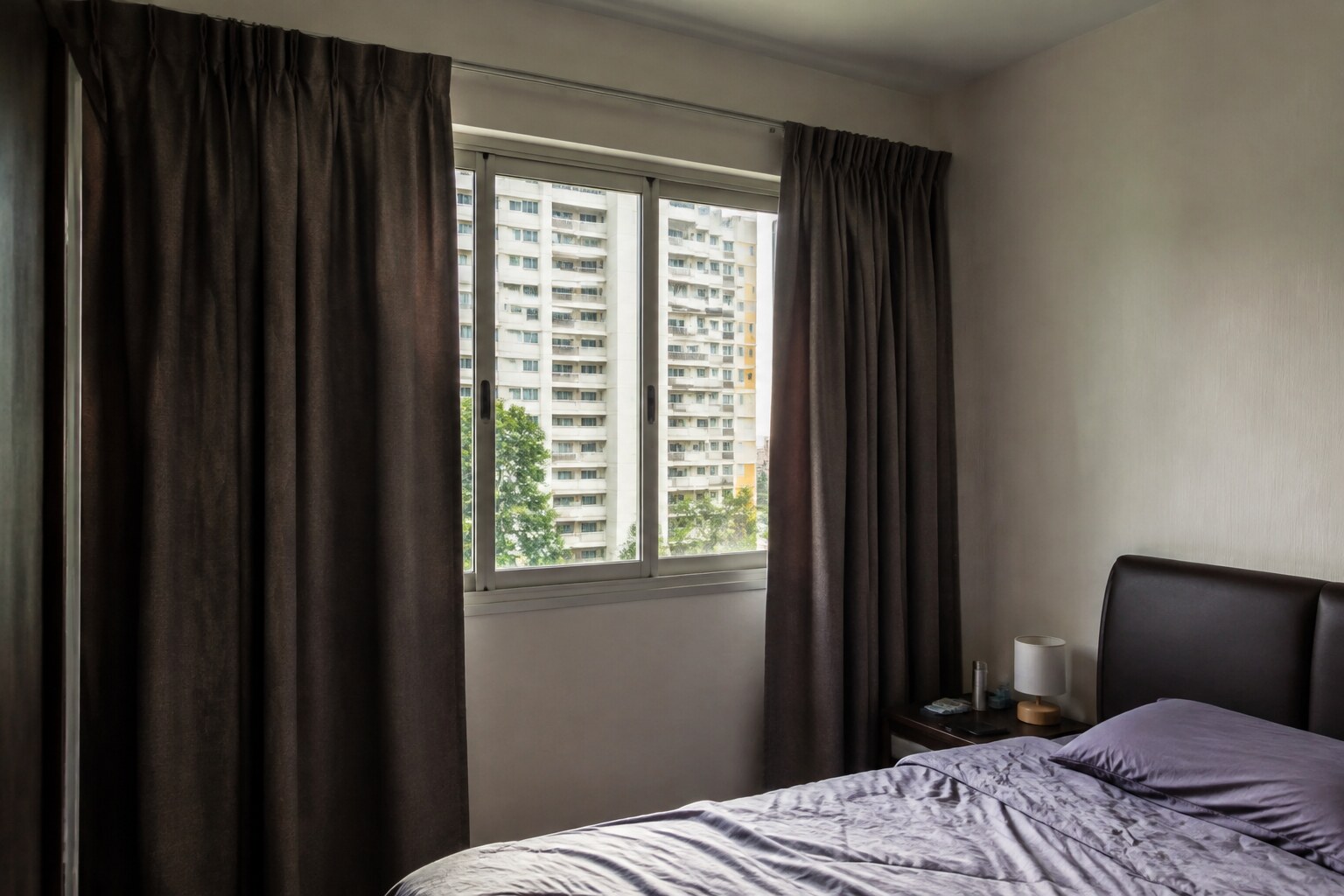
Fabric weight affects how the curtain hangs, while the chosen pleating style affects the rhythm of the folds. A lighter fabric may look softer and more relaxed. A structured or heavier fabric can create clearer folds and a more formal appearance. The same Singapore pleat or S-fold can therefore look noticeably different from one fabric to another.
Track type, window width and the amount of fabric used also matter. These details should be considered together rather than choosing a fabric in isolation.
A simple way to narrow your choice
- If you want a bright, softer room: start with a textured sheer or day curtain.
- If you want privacy and flexible light control: consider a day-and-night combination.
- If you need stronger darkness for sleep or screens: compare dim-out and blackout fabrics.
- If texture is your priority: view chenille, jacquard, embossed or linen-look samples at full size.
- If easy care matters most: ask about the fabric’s cleaning requirements before deciding.
Consider Singapore’s light and humidity
Strong sunlight, especially from west-facing windows, can affect comfort and may contribute to fading over time. Denser curtains or suitable blinds can help manage glare, but the result depends on the product, installation and room conditions. It is better to discuss the actual window than to rely on a broad promise about heat reduction.
Singapore’s humidity also makes proper ventilation and care important. Curtains near bathrooms, kitchens or windows that remain closed for long periods may need more attention. The fabric’s care label and supplier instructions should always be followed because washing and cleaning requirements differ.
The best fabric is the one that fits the room
A good choice balances appearance, light control, privacy, drape and maintenance. Before ordering, compare physical samples against the room, view them at different times of day and confirm how the fabric will be made and installed.
If you are unsure, an on-site consultation makes the decision more practical. The fabric can be considered together with the window direction, furniture, track position and the way you expect to use the room.
Written by Yoru Interior
Ready to dress your windows?
Book a free on-site measurement and our team will help you choose the right curtains and blinds for your home.
Book a Consultation