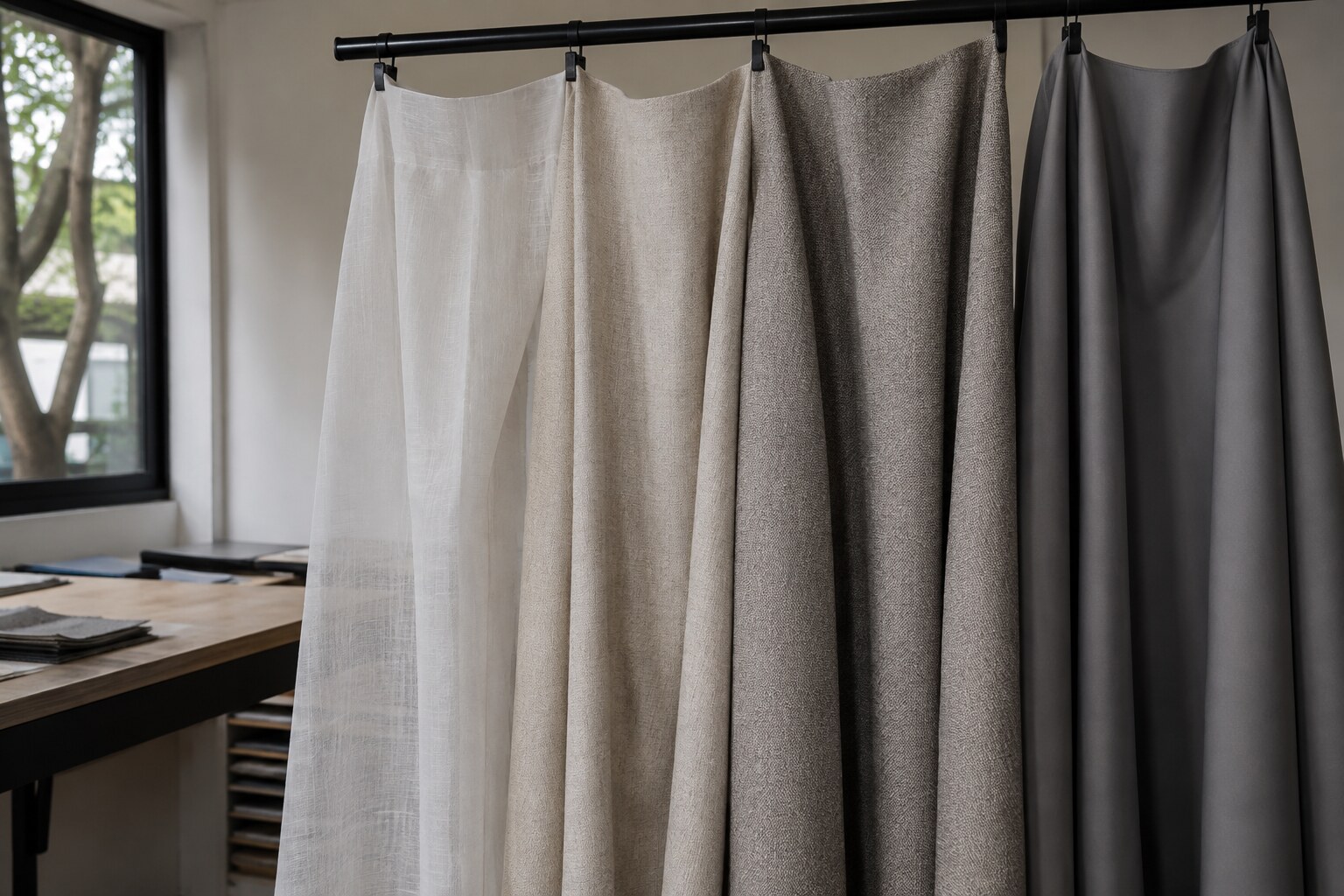
When customers start looking for window treatments, the first question is often whether curtains or blinds are better. There is no universal answer. Both can work well in Singapore homes, but they create different levels of softness, privacy, light control and visual weight.
A better starting point is to look at the room and the window before choosing the product. Consider how much sunlight enters, whether the room faces another block or walkway, how much space is available around the window and how you want the finished interior to feel.
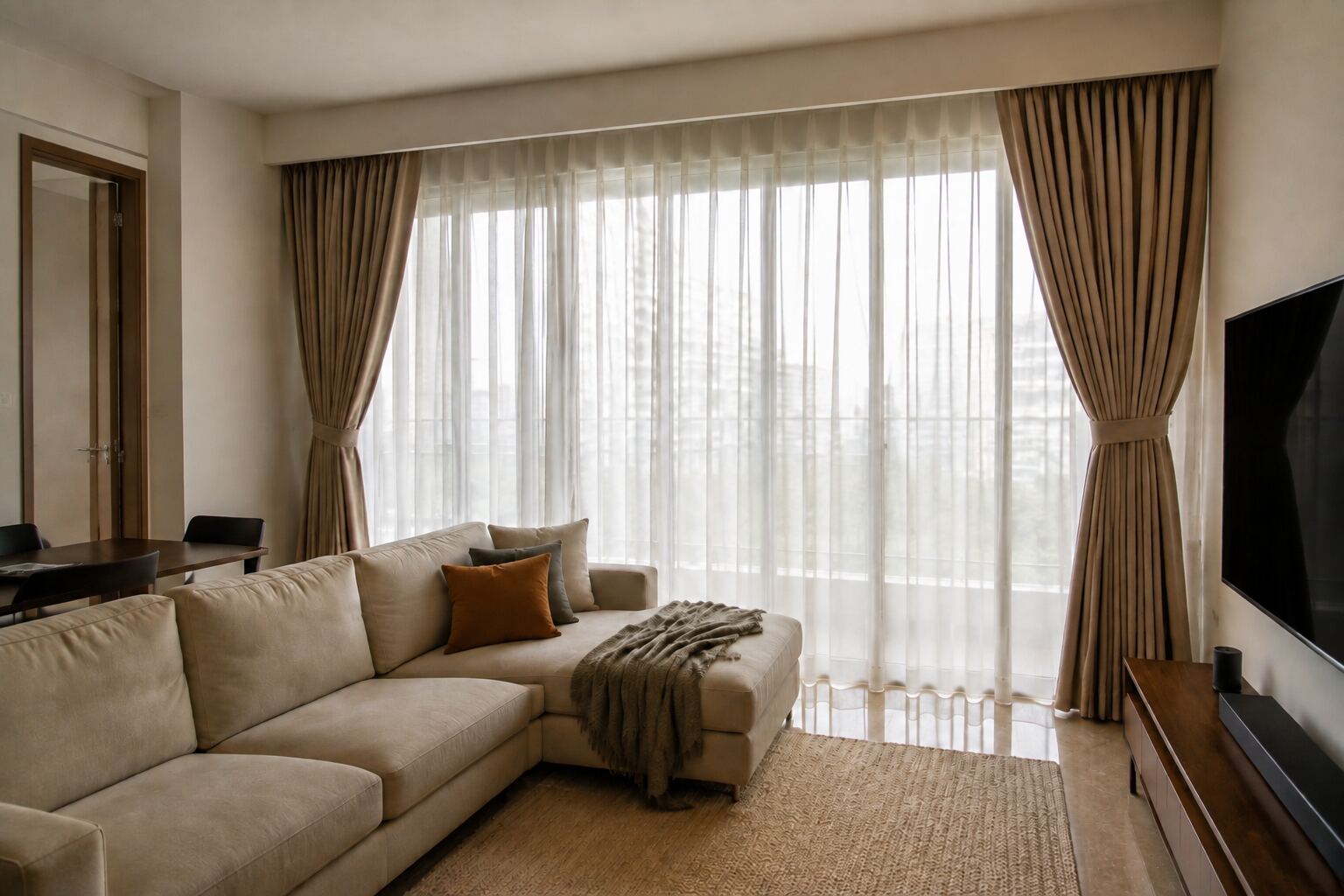
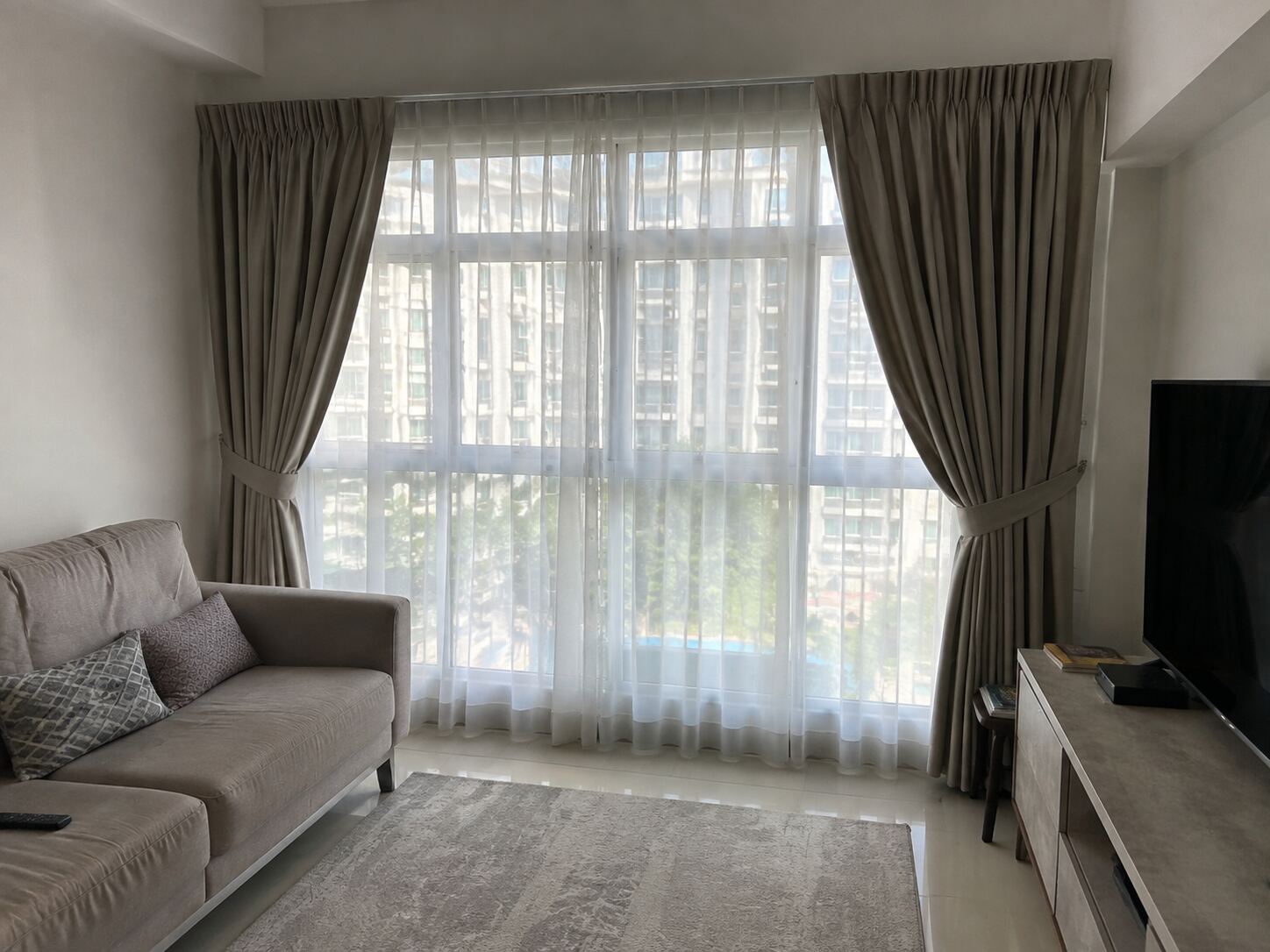
Choose curtains when softness and layering matter
Curtains are usually the stronger choice when you want fabric, fullness and a more layered interior. They can soften large windows, add warmth to a room and create a more finished feeling around full-height glazing or balcony doors.
- You want a softer, more decorative appearance.
- The window is wide, full-height or connected to a balcony.
- You want to combine sheers with night or blackout curtains.
- You prefer more flexibility in fabric texture, drape and pleating style.
- You want the window treatment to contribute strongly to the overall interior design.
Choose blinds when compact control is the priority
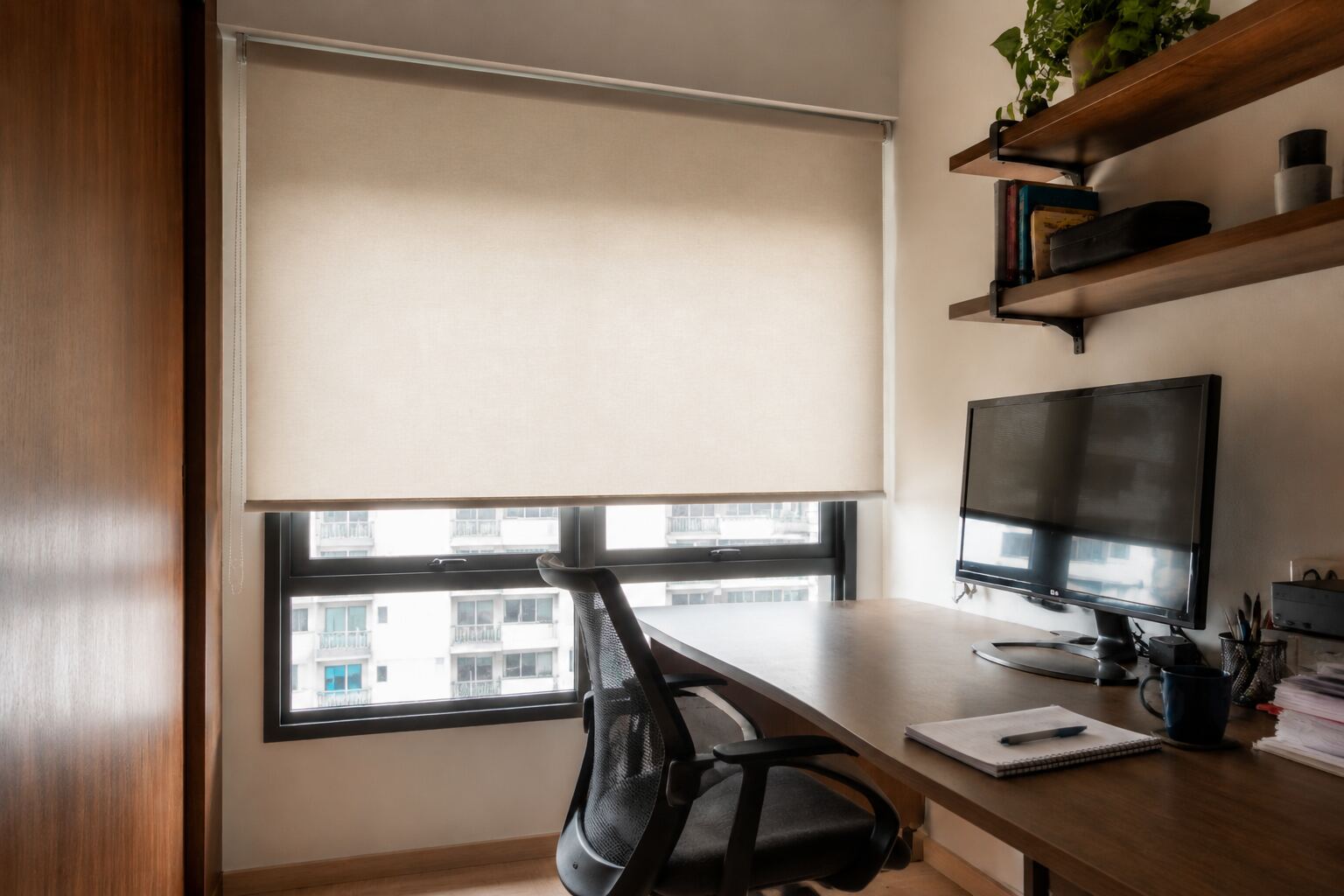
Blinds are often more practical when you want a cleaner window profile, precise light adjustment or a solution that takes up less room when opened. They work well in bedrooms, studies, kitchens and smaller rooms where heavy fabric may feel unnecessary.
- You prefer a neater, more compact finish.
- You need adjustable glare and privacy control during the day.
- The room has limited space beside the window for curtain stacking.
- You are covering several smaller windows with a consistent look.
- You want a practical option for a study, bedroom or work area.
Think about the room before the product
The same home may use both curtains and blinds. A bedroom may need blackout curtains for sleep, while a study may benefit from roller blinds that reduce screen glare. A living room may use layered curtains for softness, while a service yard or kitchen may need a simpler blind that is easier to keep clean.
- Living room: curtains are often chosen for softness, layering and a more complete design finish.
- Bedroom: blackout curtains, roller blinds or a combination may be suitable depending on darkness and privacy needs.
- Study or home office: blinds can help with glare and keep the window area visually compact.
- Dining area: either option can work, depending on the furniture clearance and the amount of evening privacy needed.
- Kitchen or utility area: a practical blind may be easier to operate and maintain than a full fabric curtain.
Consider sunlight, privacy and the window itself
West-facing windows may need stronger glare and heat management. Homes facing nearby blocks may need better privacy at particular times of day. Wide openings, sliding doors and windows close to furniture also affect the installation. These practical conditions can matter more than whether curtains or blinds are currently more popular.
For example, a curtain may look suitable in a photograph but require more stacking space than the room allows. A blind may look clean but may not provide the softness or edge coverage you want. The track, brackets, opening direction and operating method should be considered together with the product.
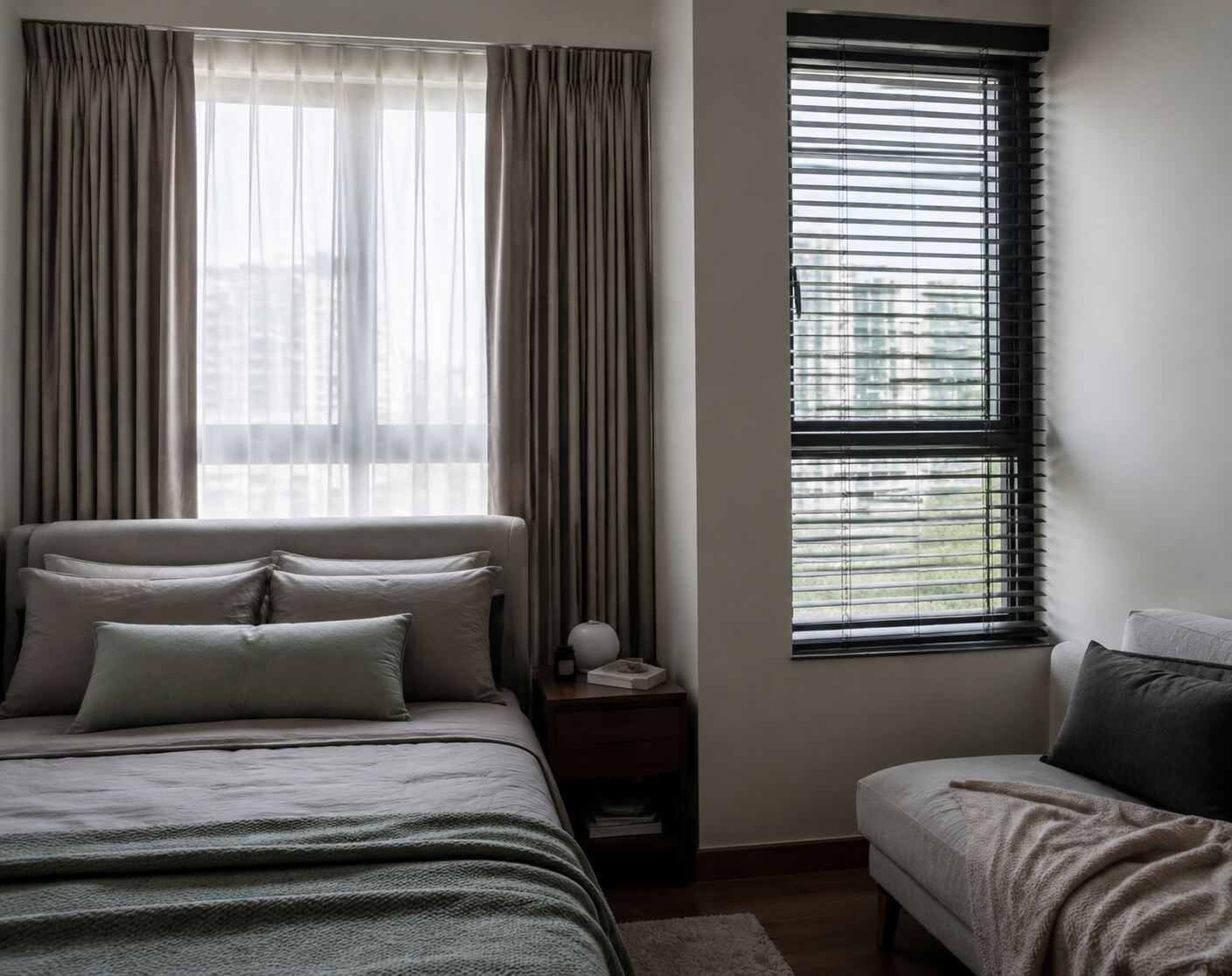
Can curtains and blinds be used together?
Yes. Combining the two can be useful when a room needs both a clean layer of practical control and a softer decorative finish. For example, a blind can provide everyday glare control while curtains add warmth and stronger privacy in the evening.
The combination should still be planned carefully. Too many layers can make a smaller room feel crowded, while the wrong track or blind depth may interfere with handles, furniture or doors.
A simple way to narrow your choice
- Start with the room: bedroom, living area, study, dining area or service space.
- Decide whether your main concern is privacy, darkness, glare, heat, styling or easy operation.
- Check how much space is available beside, above and below the window.
- Look at physical samples in the room instead of relying only on screen images.
- Ask how the product will be cleaned, operated and maintained over time.
- If the room has several competing requirements, consider whether a layered solution is more practical.
The right choice is the one that fits the room
Curtains and blinds are not simply two versions of the same product. Curtains bring softness, fabric and layering. Blinds bring compactness, adjustability and a cleaner profile. The better choice depends on the actual window, the room’s use and the balance you want between appearance and daily practicality.
If you are still unsure, an on-site consultation can help you compare the options against your window size, sunlight, furniture and privacy needs before making a decision.
Written by Yoru Interior
Ready to dress your windows?
Book a free on-site measurement and our team will help you choose the right curtains and blinds for your home.
Book a Consultation